Latest Headlines
0

Final Thoughts from the Vice Chief of Staff of the Army


This week I invited the Vice Chief of Staff of the Army, General Peter Chiarelli to provide a guest entry addressing an issue of great importance to both he and I and the Army’s other senior leaders.  As General Chiarelli prepares to retire on January 31st after three and a half years spent as VCSA and nearly forty years of service to our Army, I want to take this opportunity to thank him for the remarkable job he has done and the immeasurable impact he and his wife, Beth have had on the lives of Soldiers, Army Civilians and Family members around the world.  He is a true Patriot, a great American and undoubtedly one of our Army’s very best. 

Gen. Peter Chiarelli, the vice chief of staff of the Army (Photo Credit: Daniel Cernero, III Corps and Fort Hood Public Affairs)

“It is truly remarkable all that our Soldiers have accomplished in Iraq and Afghanistan.  Over the past decade they have done an absolutely magnificent job fighting two wars in difficult and demanding environments.

That said, they are undoubtedly tired and stressed, and many are dealing with challenges including physical and psychological wounds, injuries and illnesses incurred as a result of their service.  Among the most difficult are the non-visible wounds of post-traumatic stress and traumatic brain injury.  I frequently refer to them as the ‘signature wounds’ of this war.

The foremost challenge is the immaturity of brain science; we simply don’t yet know enough.  Researchers, doctors and other health care providers are learning more and more every day about the brain and about injuries to the brain.  But, there is much still to be discovered.

Fortunately, over the past decade, we’ve made tremendous progress in what has largely been ‘unchartered territory,’ with the development of effective protocols which we put in place downrange for concussive events and mild traumatic brain injuries; we’re currently in the process of developing similar protocols for post-traumatic stress.  Meanwhile, the medical and scientific research communities have developed new treatment and imaging methods, therapies, technologies and protective devices.

We’ve also made great strides within our own ranks.  The comprehensive behavioral health system of care in place today ensures behavioral health screenings are conducted annually, during pre-deployment, prior to redeployment and upon returning home from deployment.  Leaders and Soldiers alike now recognize the parity between physical and behavioral health.  This evolution in the culture of our Force is clearly evident in the increased number of behavioral health contacts in recent years (more than 280,000 individuals sought out-patient behavioral health care in FY11).  This is good news!

Thanks to the great work of Leaders, Commanders and Providers Army-wide we have made meaningful strides in our ongoing efforts to improve the health and discipline of our Force.  Consider where we might be today had we not started this proactive interdisciplinary effort early on.  The reality is we have never been more prepared to take care of Soldiers and Families in a post-war era.  We must maintain this momentum and ensure we take care of our most precious asset: our people.

If we all continue to do our part – reach out – help connect individuals with the tremendous outpouring of support services and resources available to them we can help heal wounds, enable opportunity, and ultimately achieve a stronger, more capable Army for the future.

It truly has been the greatest honor and privilege of my life to serve alongside America’s Soldiers, Army Civilians and Family members these last four decades.  Keep up the great work!

Army Strong!

Gen. Peter W. Chiarelli
32nd Vice Chief of Staff of the Army
 

We invite you to leave your farewells to Gen. Chiarelli in the comment section below. 

0

Progress continues at Arlington National Cemetery


The Executive Director of the Army National Cemeteries Program testified today before the Senate Subcommittee on Contracting Oversight, Committee on Homeland Security and Governmental Affairs, along with the Department of the Army Inspector General, and the Government Accountability Office Director of Defense Capabilities and Management and Director of Acquisition and Sourcing Management regarding the progress that has been made at Arlington National Cemetery, as well as findings from requirements of Public Law 111-339.

The testimony is a follow up from the July 2010 hearing, which the Army Inspector General (DAIG) reported the results of the June 2010 inspection that identified deficiencies from previous management practices at the cemetery. Since then, the DAIG completed a follow-up inspection in September 2011 that reported “significant progress has been made in all aspects of the Cemetery’s performance, accountability and modernization.”

In accordance with PL 111-339, the Secretary of the Army John McHugh released to Congress the results of a year-long

Arlington National Cemetery

effort to ensure accountability of gravesites and records at Arlington National Cemetery. The Gravesite Accountability effort resulted in the first-ever review, analysis and coordination of all Arlington records that included more than 147 years of varying records. The end result will be a single database that will serve as the authoritative record at Arlington National Cemetery.

The Government Accountability Office – also directed to submit reports in accordance with PL 111-339 – similarly noted that the Army “has taken positive steps to address management deficiencies at Arlington and has implemented improvements across a range of areas.”

Kathryn A. Condon, executive director, Army National Cemeteries Program, testified to the subcommittee regarding the standards and corrective actions that she and Patrick K. Hallinan, cemetery superintendent, instituted to address deficiencies.

“Arlington has made monumental changes the last 19 months and we continue to move forward each and every day, capturing our progress with repeatable processes with predictable results,” said Condon.

Some of the actions taken by Arlington leadership include:

  • Completing a review and accounting of all gravesites and inurnment niches at Arlington National Cemetery;
  • Creating defined accountability processes that is integrated into Arlington’s daily operations;
  • Transitioning the paper-based records keeping system to web-based systems that includes digital copies of all of the older paper records;
  • Establishing a rigorous training program for employees;
  • Validating Arlington’s contract requirements and re-competing all contracts;
  • Creating an integrated call center to improve communication with the public and assist families and funeral homes to schedule funeral services; and
  • Publishing the Army National Cemeteries Program Campaign Plan, which brings together in one strategic document the priorities, measurable standards and expected milestones to achieve the long term vision of Arlington and the Soldiers’ and Airmen’s Home National Cemeteries.

“Significant progress has been made,” said Condon.  “Our contracting practices now bring the cemetery in compliance with Federal Acquisition Regulations; and the implementation of state-of-the-art technology now makes the hallowed grounds at Arlington one of the most technologically advanced cemeteries in the country.”

Arlington National Cemetery has several technology-related tools under development. The Army is currently testing an application that will enable the public to locate gravesites in the cemetery, acquire directions to the gravesite, and view grave markers on their smart phones, or through the cemetery’s website either at home or using the on-site kiosks. Arlington’s new website is also the platform for the new “Headstone Formatting” application that is currently being evaluated for release. This technology will enable families with Internet access to design their loved one’s headstone or niche cover on-line for approval prior to the burial service, reducing the time spent on administrative matters the day of the service.

Among the national cemeteries in the United States, Arlington National Cemetery is unique.  It is the only national cemetery that routinely holds graveside services and provides full military honors for eligible veterans.  It is a national military shrine, hosting 4 million visitors annually, as well as ceremonial functions involving foreign heads of state and other dignitaries. As the second largest cemetery in the country, Arlington National Cemetery oversees approximately 27-30 funeral services per day, five days a week.  To better serve the needs of families, Arlington recently began supporting services on Saturdays for which military honors are not required or requested.

0

“Cheese Eggs” Improve Morale in Afghanistan


Joint combat outpost Shir Khan is a new addition to the Afghanistan, Tajikistan border. The 40th Engineer Battalion built it to support Afghan border police training and to secure this vital supply route between the two countries. During the first few months of construction, the Soldiers who live and work here had to eat MRE’s (or Meal, Ready-to-Eat) - that was until Sgt. John Smart arrived.


In what ways do you boost morale for your Soldier when he/she is deployed?

1

Army statement on MEDEVAC issue


Recent news items about the use of Army medical evacuation, or MEDEVAC, helicopters in Afghanistan contain troubling information. The reporting suggests that putting red crosses on MEDEVACs, and not arming them somehow, is putting injured Soldiers’ lives at risk. The facts do not support these assertions for several reasons.

U.S. Army Soldiers transport a trauma victim to a U.S. Army medical helicopter in Tarmiyah, Iraq, Sept. 30, 2007. The Soldiers are from Charlie Company, 4th Battalion, 9th Infantry Regiment, 4th Stryker Brigade Combat Team, 2nd Infantry Division out of Fort Lewis, Wash.

First, there is no evidence, implied or proven, that the enemy deliberately targets MEDEVAC helicopters, but we know from hard experience that the enemy does try to shoot down any and all U.S. and coalition aircraft. Further, all helicopters in Afghanistan fly in pairs as a force protection matter. It’s the way we do business and to suggest that arming MEDEVAC aircraft would result in crews launching sooner is a dubious assertion.

Here are the facts: the Department of Defense (DOD) has specifically tasked the Army, not any other service, to provide a standing MEDEVAC capability. The other services, as well as the Army in some cases, fly CASEVAC missions. This is a critical distinction. CASEVAC stands for Casualty Evacuation, which is a technical distinction that means they use whatever helicopters are available at the moment to extract the wounded or downed aircrews. However, DOD has tasked the Army to provide evacuation to the MEDEVAC standard, which means our MEDEVAC crews and helicopters are purpose built, manned, trained and equipped to provide advanced trauma care in flight.

While putting a red cross on our MEDEVAC helicopters has the added benefit of being consistent with the Geneva Conventions, it also marks that aircraft and crew for no other mission besides medical evacuation. In Afghanistan and other austere environments, where helicopter assets are in very high demand, it’s important that we dedicate a fleet of aircraft for no other purpose than to provide advanced in-flight care for wounded Soldiers, Sailors, Airmen and Marines.

The Army provides the great majority of medical evacuations in Afghanistan. That includes allied personnel and even enemy wounded. The U.S. Marines in Afghanistan, and in Iraq before that, specifically asked for the Army to provide medical evacuation of its personnel because they know we provide the “gold standard” in modern battlefield evacuation. No military force in the world is better than the US Army at MEDEVAC. The 92 percent survival rate for wounded in Afghanistan is the highest in history because of the power of our MEDEVAC capability and its battlefield support network.

Another important point is that arming our MEDEVACs would significantly impact the capability of the aircraft. Machine guns, related mounting equipment, ammunition and the gunners all add weight to the aircraft. The added weight would hinder the aircraft’s ability to work at higher altitudes because of reduced lift, as well as its speed and range. Additionally, MEDEVACs can carry up to four litter patients, but if weapons were added, that number would be reduced, which would in turn require the commitment of more MEDEVAC aircraft, an already low density and high demand asset.

Further, arming MEDEVACs would not reduce the need for armed escort. Again, our aircraft travel in pairs. The decision to use escort is the tactical commander’s, and the Army does not dictate how or when it is necessary to use these assets.

Finally, it’s important to remember that the Army would change its policy if battlefield commanders wanted a change. We take our obligation to perform the MEDEVAC mission very seriously. We’re a learning organization and periodically we review our policies to make sure they remain relevant. We looked at the MEDEVAC policy in 2008, but after a review, we determined no change was necessary.

In addition, neither the International Security Assistance Force nor U.S. Forces – Afghanistan has requested a change in policy; because our MEDEVAC crews and aircraft provide the best chance at survival ever seen in warfare, and because — as commanders in Afghanistan have told us — not arming our MEDEVACs and identifying them with the red cross has had no impact on the medical evacuation mission.

1

As wars fade, Soldiers and Families continue to sacrifice


Today’s blog post is a commentary from the 21st Secretary of the Army, the Honorable John McHugh.

For the first time in eight years, we’ve entered a January without American Soldiers patrolling the streets of Iraq. As the President confirmed last week, our transition in Afghanistan continues and troops will be coming home in the months to come.

Since these wars began, we’ve had more than 47,000 American service members wounded in Afghanistan and Iraq. Beside each one is a family impacted by war … a family who helps the wounded overcome their injuries and face the challenges of recovery. Theirs is a heavy burden, yet they face it with dignity, courage and resilience.

Since becoming Secretary of the Army more than two years ago, I’ve visited our wounded heroes and their families at medical facilities at home and abroad. I am always moved and inspired by these great young men and women and their families. They truly represent the strength of our Army and the best of our nation.

This week I visited Brooke Army Medical Center and the Center for the Intrepid in San Antonio, Texas, where I had the privilege of meeting more troops and their families and awarding the Purple Heart Medal to a number of these heroes. The Purple Heart is our nation’s oldest continuously awarded military decoration, and ironically, one that probably no one sets out to earn.

I had the solemn honor of awarding the Purple Heart to nine soldiers yesterday. One of them, Pfc. Charles Ligon, from West Frankfort, Ill., had recently returned from Afghanistan. He had suffered severe burns and other significant injuries including an amputation to his left leg after his vehicle struck an improvised explosive device during a patrol with the 3rd Stryker Brigade Combat Team, 25th Infantry Division.

Like so many who’ve joined our ranks in recent years, Pfc. Ligon was just a boy when terrorists attacked our nation a decade ago. He grew up in a time of war and volunteered to serve knowing what that could mean. As I spoke with his mother, Susanne Willmore, I was struck by how proud she was that her son had made that choice two years ago to join the Army, and how determined she was to help him persevere and recover from his injuries. Family members are an integral part of our Soldiers’ recovery.

A short walk from the hospital complex is the Center for the Intrepid, an impressive rehabilitation facility with state-of-the-art equipment. However, more remarkable than the structure are the young men and women who walk through its doors each day. Their tireless work to recover from the severe wounds of war is simply inspirational. The price of liberty is steep, but the men and women I met exemplify courage, strength and the triumph of the American spirit.

Throughout our history, our freedoms have been bought through the sacrifice and selfless service of men and women like PFC Ligon – ordinary Americans inspired to extraordinary service, and who are now rising to meet new challenges.

As our brave men and women return home from war, recognize the small purple ribbon so many have earned. It is a symbol of their courage, service and sacrifice to our nation, but it also represents the sacrifice their families have made on our behalf.

0

Getting them back home


With the constant threat of IEDs in Afghanistan,  it’s inevitable that U.S. Army vehicles will be disabled. And while getting these vehicles back home can be a challenge, one instructor has the answer.


0

Operation Desert Storm


Today marks the 21st anniversary of the beginning of Operation Desert Storm. The conflict, as know as the Gulf War, was waged by a U.N.-authorized coalition force from 34 nations led by the United States, in response to Iraq’s invasion of Kuwait. Check out the timeline below for a snapshot of events that took place during this time:

Day 1: Wednesday, Jan. 16

  • Desert Storm begins at 7 p.m. EST (3 a.m. Jan. 17 in Iraq) with massive air and missile attacks on targets in Iraq, Kuwait.
  • President Bush: “We will not fail.”

Day 2: Thursday, Jan. 17

  • Iraqi President Saddam Hussein declares: “The great showdown has begun! The mother of all battles is under way.”
  • Iraqi Scud missiles strike Israel.
  • Scud fired at Saudi Arabia is downed by U.S. Patriot missile – first anti- missile missile fired in combat.

Day 3: Friday, Jan. 18

  • Amid retaliation speculation, President Bush says Israel has promised not to respond to Iraq’s attack.

Day 4: Saturday, Jan. 19

  • At least three Scuds explode in Tel Aviv, Israel, injuring about 17. Israel vows to defend itself but refrains. United States rushes in Patriots, making Army crews first U.S. soldiers to defend Israel.
  • U.S. troops raid oil platforms off Kuwait, capturing first Iraqi prisoners of war.

Day 5: Sunday, Jan. 20

  • Iraqi TV airs interviews with captured allied airmen.
  • Iraq fires 10 Scuds at Saudi Arabia; nine are intercepted, one falls offshore.

Day 6: Monday, Jan. 21

  • U.S. officials say despite more than 8,000 sorties in five days, elusive mobile Scud missile launchers remain a threat.
  • Iraq says it has scattered prisoners of war as shields at allied air targets.

Day 7: Tuesday, Jan. 22

  • Iraq fires six Scud missiles at Saudi Arabia; one is destroyed by Patriot, others fall harmlessly.
  • Iraq torches Kuwaiti oil wells, tanks.
  • A Scud eludes U.S. Patriot missiles and hits Tel Aviv. Three people die.

Day 8: Wednesday, Jan. 23

  • U.S. officials deny Saddam Hussein’s claim that allies bombed baby-formula plant, saying plant was a chemical factory.
  • Iraq fires Scuds at Israel and Saudi Arabia; no casualties.
  • President Bush urges Saddam Hussein be brought to “justice,” suggesting removal of Iraqi president could be a goal.

Day 9: Thursday, Jan. 24
  • Number of allied sorties surpasses 15,000.
  • Saudi officials report two oil slicks moving south of Kuwait. Allies say Iraq released oil; Iraq blames allied bombs.

Day 10: Friday, Jan. 25

  • Japan says it will send military aircraft to assist allies in non-combat situations.
  • Scud missiles are fired at Israel and Saudi Arabia. Two people killed.

Day 11: Saturday, Jan. 26

  • Massive oil spill grows, threatening Saudi Arabia’s industrial and desalination plants and gulf environment.
  • Iraqi warplanes land in Iran. Iran says it has seized them.
  • U.S. F-15s enter war’s first major dogfight, shoot down three Iraqi MiG- 23s.
  • Pentagon confirms USS Louisville is first sub to launch cruise missile in combat.
  • Scuds fired at Israel and Saudi Arabia; no casualties.
  • More than 75,000 protesters march in Washington, D.C.

Day 12: Sunday, Jan. 27

  • Allies bomb Iraqi-held oil facilities in Kuwait to stop Iraq from dumping oil into gulf.
  • Amid fears of terrorism, Super Bowl XXV goes off without a hitch.

Day 13: Monday, Jan. 28

  • Iraq says captured allied pilots have been injured in allied bombing raids.

Day 14: Tuesday, Jan. 29

  • In largest ground battle yet, battalion-size force of U.S. Marines (up to 800) fire artillery, mortars, TOW missiles, at Iraqi bunkers half-mile away in Kuwait. No U.S. casualties.
  • United States, Soviet Union issue communique offering Iraq cease-fire if it makes “unequivocal commitment” to withdraw.

Day 15: Wednesday, Jan. 30

  • Scores of Iraqi tanks, thousands of troops advance into Saudi Arabia. Attacks are countered by U.S. Marines, Saudi and Qatari troops. Eleven Marines die.
  • Gen. Norman Schwarzkopf, allied commander, says allies have air supremacy and are reducing Scud threat.

Day 16: Thursday, Jan. 31

  • Saudi and Qatari troops, backed by U.S. artillery, retake Khafji, Saudi Arabia.
  • Sheik Abdul-Aziz Bin Baz, Saudis’ leading interpreter of Islamic law, calls Saddam Hussein “enemy of God.”

Day 17: Friday, Feb. 1

  • Allies bomb 10-mile-long Iraqi armored column headed into Saudi Arabia.

Day 18: Saturday, Feb. 2

  • Two Scuds hit central Israel; no casualties. Patriot downs Scud over Saudi Arabia; two injured.

Day 19: Sunday, Feb. 3

  • Allied air campaign passes 40,000-sortie mark – 10,000 more missions than were flown against Japan in final 14 months of World War II.
Day 20: Monday, Feb. 4

  • Iran offers to mediate peace talks, resume official relations with United States.
  • Battleship Missouri fires at Iraqi positions inside Kuwait – first time ship has fired in combat since Korean War.

Day 21: Tuesday, Feb. 5

  • Iraq suspends fuel sales to civilians, worsening heating and transportation problems.
  • Syrian troops, in first combat action, repulse Iraqi probe at Saudi-Kuwait border.

Day 22: Wednesday, Feb. 6

  • U.S. F-15 fighters shoot down four Iraqi jets as they try to join 120 Iraqi aircraft that have been flown to Iran.

Day 23: Thursday, Feb. 7

  • President Bush’s top two war advisers – Defense Secretary Dick Cheney and Joint Chiefs Chairman Colin Powell – leave for gulf to assess war.
  • Battleship Wisconsin joins Missouri in firing huge 16-inch guns at sites in Kuwait – first combat firing for Wisconsin since Korean War.

Day 24: Friday, Feb. 8

  • Defense Secretary Dick Cheney, en route to Saudi Arabia, gives strongest indication to date ground war is coming. Open question: when.

Day 25: Saturday, Feb. 9

  • Defense Secretary Dick Cheney and Joint Chiefs Chairman Colin Powell meet for more than eight hours with Desert Storm commander, Gen. Norman Schwarzkopf, other military leaders.
  • Soviet President Mikhail Gorbachev warns that military operations in Persian Gulf war threaten to exceed U.N. mandate; he says he’s sending envoy to Baghdad for talks with Saddam Hussein.

Day 26: Sunday, Feb. 10

  • Saddam Hussein addresses his nation for first time since three days after war started, pledging victory and praising “steadfastness, faith and light in the chests of Iraqis.”

Day 27: Monday, Feb. 11

  • President Bush, after meeting with top two military advisers, says alliance is in no hurry to begin ground war.
  • News reports in Egypt say Iraq’s government estimates privately that more than 15,000 Iraqi troops have been killed.

Day 28: Tuesday, Feb. 12

  • Allied forces open combined land-sea-air barrage against Iraqis in Kuwait – largest battlefield action to date.
  • Officials say cost of fighting effects of oil slick lapping at Saudi Arabia’s coast will be $1 billion over next six months.

Day 29: Wednesday, Feb. 13

  • U.S. Stealth fighters drop two bombs on fortified underground facility in Baghdad. Iraqi officials claim at least 500 civilians are killed in facility, which they describe as public bomb shelter. U.S. military officials release information they say proves underground facility was military command center.

Day 30: Thursday, Feb. 14

  • Pentagon says allied planes have destroyed at least 1,300 of Iraq’s 4,280 tanks, 800 of 2,870 armored vehicles and 1,100 of 3,110 artillery pieces.
  • United Nations Security Council meets in closed session to discuss war.

Day 31: Friday, Feb. 15

  • Iraq says it is prepared to withdraw from Kuwait, but adds conditions, including Israeli pullout from occupied Arab territories, forgiveness of Iraqi debts and allied payment of costs of rebuilding Iraq. President Bush dismisses Iraqi offer as “cruel hoax.” – Allied forces continue moving supplies toward front in preparation for launch of ground war.

Day 32: Saturday, Feb. 16

  • U.S. attack helicopters make first nighttime raids on Iraqi positions.
  • Iraqi authorities claim 130 civilians were killed by British Tornado jet strikes.
  • Iraq fires two Scuds at Israel, hitting southern part of country for first time; no injuries.
  • Iraq’s ambassador to U.N., Abdul Amir al-Anbari, says Iraq will use weapons of mass destruction if U.S. bombing continues.
  • Pentagon says Iraq deliberately staged damage of civilian areas as propaganda.

Day 33: Sunday, Feb. 17

  • President Bush says Iraq’s takeover of Kuwait will end “very, very soon.”
  • U.S. and Iraqi troops clash in seven incidents along Saudi-Kuwait border; 20 Iraqis surrender to Apache helicopter fire.
  • Iraq’s foreign minister, Tariq Aziz, arrives in Moscow for talks with Soviet President Mikhail Gorbachev. He is quoted en route as saying it’s up to allies to act on Iraq’s peace proposal.
  • U.S. military, intelligence officials estimate 15% of Iraq’s fighting forces in Kuwait area have been killed or wounded.

Day 34: Monday, Feb. 18

  • Floating mines strike two U.S. warships in gulf. USS Tripoli and USS Princeton damaged but still operational.
  • Air Force helicopter search team rescues U.S. pilot who parachuted from disabled plane 40 miles north of Saudi border.

Day 35: Tuesday, Feb. 19

  • Baghdad Radio reports Foreign Minister Tariq Aziz has returned to Baghdad with Soviet peace proposal.
  • President Bush says Soviet proposal falls “well short” of what’s needed to end war.
  • Iranian newspaper cites Iraqi official as saying Iraq has suffered 20,000 dead, 60,000 wounded.
  • U.S. Marines bombard Iraqi targets inside Kuwait with heavy artillery fire for second consecutive day.
  • Saudi officials say gulf oil slick is smaller than originally feared – 60 million gallons, not 400 million.

Day 36: Wednesday, Feb. 20

  • One American killed, seven wounded in fighting along Saudi border. U.S. helicopters destroy Iraqi bunker complex; up to 500 Iraqis taken prisoner.
  • U.S. planes attack 300 Iraqi vehicles 60 miles into Kuwait, destroying 28 tanks.
  • Baghdad Radio says Foreign Minister Tariq Aziz will travel to Moscow “soon” with Saddam Hussein’s reply to Soviet peace proposal.
  • Allied commander Norman Schwarzkopf is quoted as saying Iraq’s military is on “verge of collapse.”
  • U.S. officials want Iraq to announce specific timetable for withdrawing from Kuwait as condition for peace settlement.

Day 37: Thursday, Feb. 21

  • Soviet spokesman Vitaly Ignatenko announces Iraq, Soviet Union have agreed on plan that could lead to Iraqi withdrawal.
  • Saddam Hussein declares Iraq remains ready to fight ground war.
  • Defense Secretary Dick Cheney says allies are preparing “one of the largest land assaults of modern times.”
  • Seven U.S. soldiers killed in helicopter crash – war’s deadliest non- combat accident to date.

Day 38: Friday, Feb. 22

  • President Bush rejects Soviet peace plan, deplores Iraq’s “scorched- earth” destruction of Kuwaiti oil fields. He demands Iraq begin withdrawal from Kuwait by noon Feb. 23 to avoid ground war.
  • Iraqi information official brands U.S. position “shameful ultimatum.”
  • Soviet Union announces eight-point withdrawal plan.
  • Iraq sets ablaze one-sixth of Kuwait’s 950 oil wells.

Day 39: Saturday, Feb. 23

  • Allies’ ground offensive begins at 8 p.m. EST (4 a.m. Feb. 24 Saudi time).
  • Defense Secretary Dick Cheney halts news briefings on war.
  • At 10:02 p.m. EST, President Bush tells nation, “The liberation of Kuwait has entered the final phase.” Bush authorizes commander Norman Schwarzkopf to “use all forces available, including ground forces, to expel the Iraqi army from Kuwait.”
  • U.S. officials say Iraqi soldiers are rounding up Kuwaitis to torture, execute.
  • At least 200 oil wells and facilities are ablaze in Kuwait.

Day 40: Sunday, Feb. 24
  • Gen. Norman Schwarzkopf hails first day of allied ground offensive as “dramatic success.” Allied casualties are very light; more than 5,500 Iraqis are captured.
  • Saddam Hussein urges troops to kill “with all your might” in radio speech.
  • More than 300 attack and supply helicopters strike more than 50 miles into Iraq, largest such assault in military history.
  • Queen Elizabeth II, in first wartime broadcast of 39-year reign, tells her country she has prayed for victory.
  • Iraq fires two Scud missiles into Israel; no injuries.

Day 41: Saturday, Feb. 25

  • Baghdad Radio reports Saddam Hussein has ordered troops to withdraw from Kuwait in accordance with Soviet peace proposal.
  • Says White House spokesman Marlin Fitzwater: “The war goes on.”
  • On Kuwait’s Independence Day, allied forces are reported on outskirts of Kuwait City, poised to liberate capital as more reports surface of Iraqi killings of civilians and torching of buildings.
  • Iraqi Scud missile hits barracks in Al Khobar, Saudi Arabia. Eventual toll: 28 U.S. soldiers killed, 90 wounded.
  • U.S. officials report four U.S. soldiers killed, 21 wounded in first two days of allied ground assault; nearly 20,000 Iraqis taken prisoner; 270 tanks destroyed.
  • Iraqi-launched Silkworm anti-ship missile shot down by allied warships.

Day 42: Tuesday, Feb. 26

  • Brig. Gen. Richard Neal in Riyadh, Saudi Arabia, says Iraqi forces are in “full retreat” with allied forces pursuing; Iraqi POWs number 30,000-plus, number to climb to 63,000.
  • Saddam Hussein announces Iraqi occupation forces will withdraw completely.
  • Residents of Kuwait City celebrate end to occupation. Resistance groups set up headquarters to control city.
  • U.S. Marine in Kuwait City says U.S. Embassy is back under U.S. control.

Day 43: Wednesday, Feb. 27

  • Kuwaiti troops raise emirate’s flag in Kuwait City.
  • President Bush declares suspension of offensive combat and lays out conditions for permanent cease-fire
5

Army “Fab Five”


The “Fab Five” of Michigan University in the early 90’s has been heralded as the best college recruits in college basketball history.  This team of talented five battled bravely on the court to be highly respected in their profession. Have you ever thought the Army’s “Fab Five” in weaponry? We have a few weapons we think would make our “Fab Five” team. These five picks have been around a lot longer, established superiority, and mission effectiveness in many battles.

Announcing our starting lineup:

Our first pick for the lineup playing small forward is the M4 Carbine Small Rifle. This weapon is lighter and more durable.

The U.S. Army Fab Five (weaponry)

The gas operated, air-cooled, magazine fed weapon has served Soldiers for up to three years.   It’s compact size, shortened barrel, multi-functional butt stock are just a few of the rifles features that differ from its predecessor the M16.

One the most recognizable features of the rifle is its transitional butt-stock (The ability to lengthen or shorten the rifle based on mission and comfort). This weapon brings to our fighting force the abilities of small forward, Ray Jackson of the Fab Five.

Playing center is our handheld Defense Advanced Global Positioning Satellite Receiver (DAGR). This device has been a part of our new modernized compass for a more equipped Soldier. The multifunctional capability of this device has allowed our troops to navigate very treacherous terrain in Iraq and Afghanistan.

Al though some Soldiers have said the old compass will never live down its legacy, the GPS has established itself in battle and many conflicts.  DAGR’s have been in service for more than five years and have allowed Soldiers to navigate terrain more effectively. This system has been proven as most effective because of its capability to display accurate un-assumed coordinates for Soldiers in combat environments.

GPS most recognizable feature is its graphical screen that has the ability to overlay map images and long battery life. In comparison to Juan Howard of the Fab Five, this weapon will be around for a lot longer for many more battles to come.

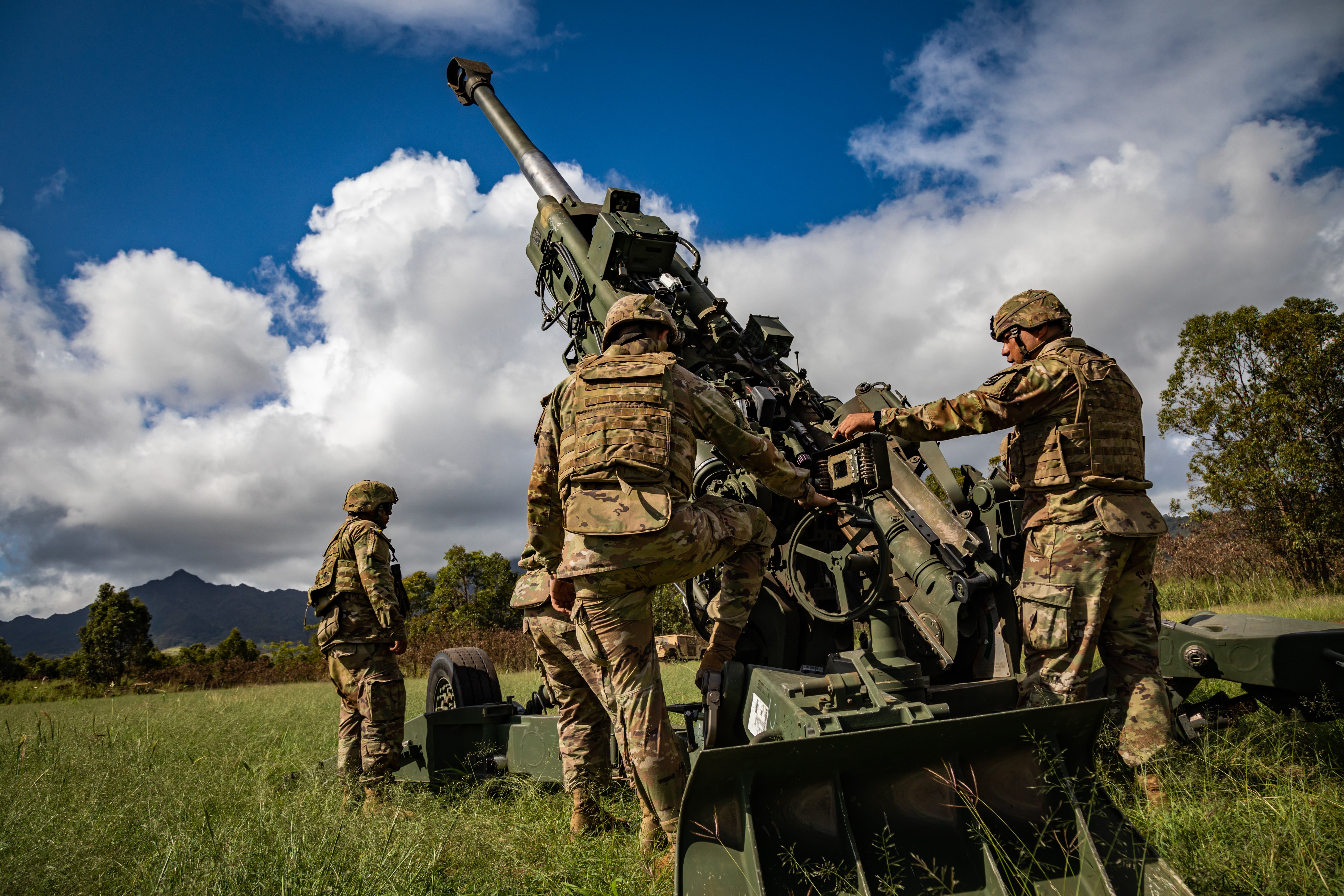
One of our most pivotal players,  the power forward , is the Lightweight 155 millimeter Howitzer. Successor to the M198 Howitzer,  it has been in use by our Soldiers since 2008 during Operation Iraqi Freedom.  This weapon is considered to be about 42 percent lighter than its predecessor. The Lightweight 155 millimeter modifications have allowed this weapon to be transported by the by CH-47 faster.

The accuracy, dependability and effectiveness of Fab Five member, Chris Webber is a true comparison to the Lightweight 155 millimeter Howitzer.

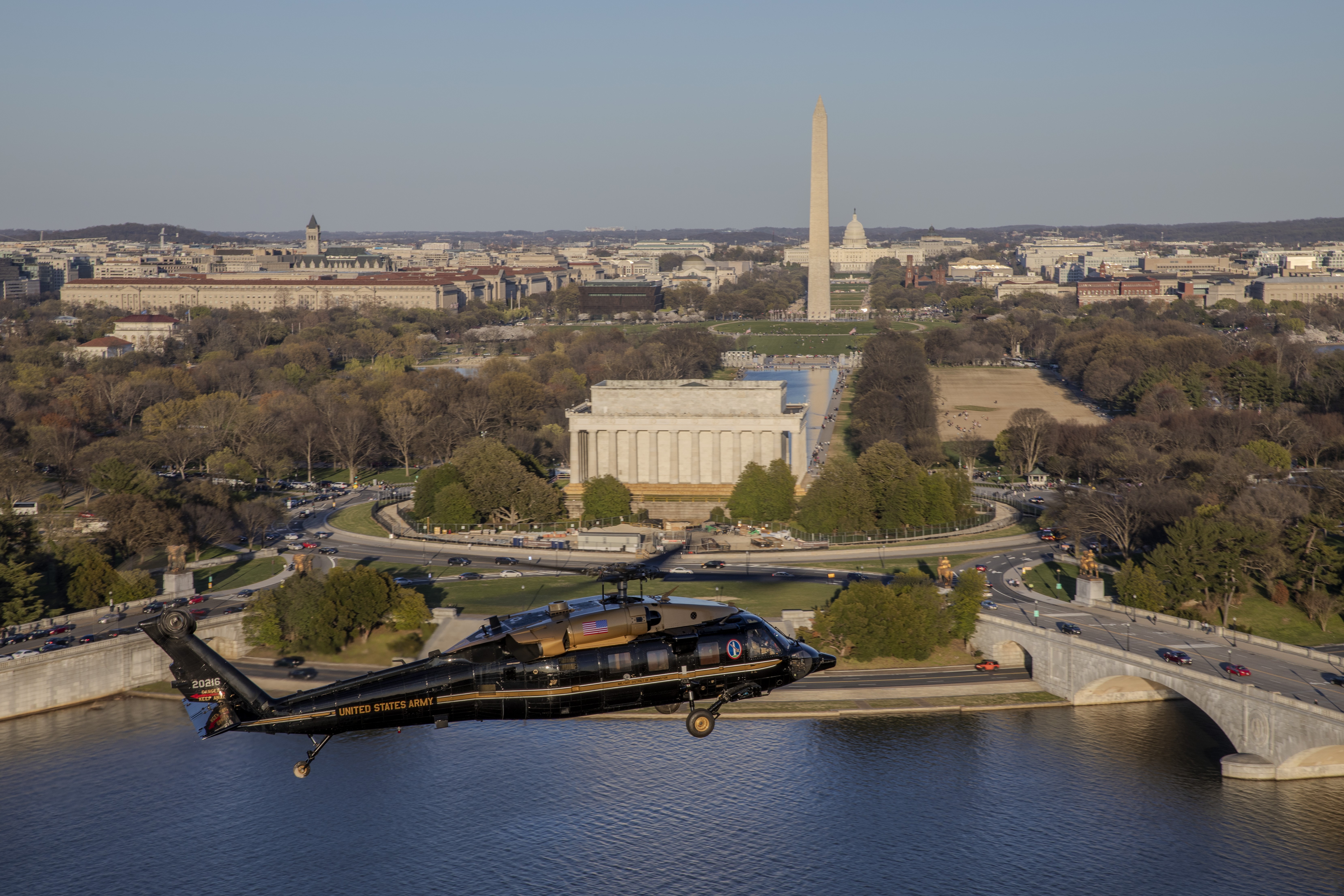
Giving us powerful battlefield advantage and tactics the UH-60 Black Hawk helicopter. The Black Hawk has been in service since 1979, getting its first start with the 101st Combat Aviation Brigade of the 101st Airborne Division Air Assault. These powerful air assault tool continues to be a team player in the Army weapons systems. Black hawks have seen conflicts from Grenada to recent operations in Iraq and Afghanistan.

There have been many different variants of the Black Hawk. Its versatility makes it one the Army’s most prized weapons. Having been built for rapid deployment of troops into hostile areas, the Black Hawk has also received various upgrades, including the ability to be equipped with several weapons such as the M60 Machine Gun.

Our UH -60 Black Hawks brings to us the versatility that Jimmy King brought to the Fab Five.

Rounding out our top Army Fab Five is the .50 caliber machine gun more commonly known as the “ma-deuce” or “the-fifty.” Mostly known for its use mounted on small armored vehicles, the .50 caliber rifle varies in use for many military operations.  This weapon has been modified to many different forms that allows the cyclic rate of this weapon to be just that more effective. One of its many special features includes a double feed trey for rapid firing.

Just as Michigan Fab Five point guard, Jalen Rose gave offensive power to his team, our .50 caliber rifle gives us the same offensive advantage.

Army weapons systems have modernized greatly over the course of time. Let us know what you think of our “Army Fab Five” and share with us what Army weapons you would like to see in our lineup and why.

Blog post submitted by Andrew  McIntyre, Public Affair Specialist, Department of the Army Intern

0

Know the Facts – Election 2012

Know the Facts


With election activity picking up, defense officials are in the process of issuing regular election-year guidance to remind military and Defense Department civilians that they’re subject to rules regulating their involvement in political activities.

Don’t quite understand all the jargon in the regulations outlined? Here are the major “do’s” and “don’t's” regarding election time for service members and civilians:

Do’s (Federal Civilian employees):

- Civilian employees are free to engage in the vast majority of political activities.

This includes: joining a political party;displaying a political sticker, sign or button; attending a convention or rally; serving as a political party officer or delegate; serving as a poll worker; distributing political literature; endorsing or opposing a candidate and, of course, voting.

- Civilian employees are also allowed to run for non-partisan office, make financial contributions to a campaign and attend political fundraisers.

Don’t's (Federal Civilian employees):

- Civilian employees may not use official authority to interfere with election results, solicit or receive volunteer services from a subordinate, allow the use of their official title in political fundraising, host or sponsor a political fundraiser, or run for partisan office.

- Civilian employees may not use their official titles when participating in permissible political activities or participating in an otherwise permissible political activity while on duty, in a government office, or while using a government vehicle.

Do’s (Service members):

- Service members may join a political party; display a political sticker, sign or button; and vote.

- Service members may attend political rallies as a spectator, provided they are not in uniform, and may make financial contributions to candidates who are not employees of the U.S.

Don’t's (Service members):

- Service members are prohibited, by law, from using official titles when participating in permitted political activities, and from soliciting or receiving volunteer services from a subordinate, soliciting or receiving political contributions, participating in partisan political management, campaigns or conventions (unless attending as a spectator not in uniform) or running for partisan office.

As there are a number of restrictions on the activities of military personnel and the rules are not always clear, the most prudent course of action is to ask before engaging in any political activity.

REMEMBER: care needs to be exercised to ensure that  service members nor civilian employees act in a manner that would imply or appear to imply that political activities are endorsed or approved by DoD, according to the both the Hatch Act and DOD directives.

0

2012 All American Bowl – A taste of Army training


The U.S. Army All-American Bowl is an annual high school football all-star game held Jan. 8, 2012, in San Antonio, Texas, at the Alamodome Stadium.  Each year, the game brings 90 of the nation’s top high school football players in an East versus West matchup.  In addition to the Bowl game, there is the U.S. Army All-American Marching Band, which comprises 125 of the nation’s top high school marching musicians who perform during halftime of the U.S. Army All-American Bowl.

Selection as a U.S. Army All-American is an important and prestigious honor for these athletes and musicians.  Only the strongest are chosen to wear the Army colors, and these young men and women truly embody the characteristics of the Army Strong Soldier – demonstrating Strength through Loyalty, Duty, Respect, Selfless Service, Honor, Integrity, and Personal Courage on a daily basis.  Activities throughout Bowl Week help connect these All-American athletes and musicians with Army Soldier Heroes from around the country and provide better understanding of what it takes and what it means to be an Army Strong Soldier.

Check out the video below as Army Drill Sergeant of the Year, Staff Sgt. John Heslin, chats with All-American Alex Carter and gives him a taste of Army Strong training!


“Only the Strongest Wear our Colors”